Sunday, September 12, 2010
Video Bar
I put some videos of me riding and America Knows Atoms on the video bar... feel free to watch some of them!!!

Tuesday, September 7, 2010
Sodium Chloride
This is my extra credit for the test and hopefully I can get +5 points!!!

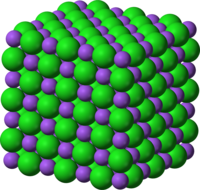


I hope I did this right :-)
Sodium Chloride
Sodium chloride (NaCl) is one of the most interesting compounds to me because it has many uses. Most of those uses are common everyday things. Sodium chloride can also be called salt, common salt, table salt, or halite. One of the uses of sodium chloride is to preserve food. The reason it is used for this purpose is because salt (sodium chloride) draws the water out of the cells of food (yes, this means that the food had to be alive at some point). For example salt would be used to preserve fish. Another use of salt is to disinfect wounds. Another use is shampoos and cleansing solutions used on household surfaces (salt is in these products). A very common use of salt is to season your food. Say you just ordered a small fry at McDonald's and you don't think there is something missing... you put salt (sodium chloride) on it and your tastebuds are satisfied. There are also MANY other uses of salt... too many to name. Obviously salt is pretty important if we use it in a lot of things. Sodium chloride is the most interesting and most useful compound there is!!!! Here are some pictures of the awesomest compound...
I hope I did this right :-)
Saturday, September 4, 2010
Parts of Atoms
Here is the video for parts of atoms... homework 9-9-10
Science Video
(click on the link above OR go to the video bar at the top of this page and click on the video with zelle showing in the picture)
Science Video
(click on the link above OR go to the video bar at the top of this page and click on the video with zelle showing in the picture)
Wednesday, September 1, 2010
Homework Due 9-2-10
Democritus lived in Ionia, Greece around 430 BCE. He was an Ancient Greek philosopher and he stated that the atom is the smallest particle of an element. He said, " Matter is formed of small pieces that could not be cut into smaller parts." The greek word for atom is atomos, which means uncuttable. He didn't actually prove that atoms cannot be cut up into smaller particles by experimenting, but he just thought about it. No one questioned Democritus and therefore no one tried to find out more about atoms or find out if there is something smaller than an atom. The next scientist to have studied atoms was John Dalton, an english chemist, meteorologist, and physicist. Dalton discovered more information about atoms during the early 1800's. He created a model of the atom called the "Pool Ball/ Grape" model. Dalton also had some ideas about atoms. One idea was that all elements are composed of atoms that can't be divided. Another idea was that all atoms of the same element are exactly alike and have the same mass. Another idea was that an atom of one element cannot be changed into an atom of a different element. Atoms also cannot be created or destroyed, just rearranged. One other idea was that every compound is composed of atoms of different elements, combined in a specific ratio. Democritus and Dalton both helped very much to discover information about atoms.
Cites:
-Wikipedia
-Notes from class
Cites:
-Wikipedia
-Notes from class
Subscribe to:
Posts (Atom)