Objective 2:
2) You can identify a substance by its solubility because it is a characteristic property of matter.
3) The factors that affect the solubility of a substance are temperature and pressure.
4) For most solutes, the higher the temperature of the solvent, the faster its rate of dissolving and the greater its solubility.
5) see number 2
Objective 3:
1) Acids are sour to the taste. They are also very corrosive to metals. This means that they will change the color of metals and in some cases make them dissolve. When an acid is put onto litmus paper, it turns the paper red. Acids release hydrogen ions.
2) Bases are slippery to the touch. When a base is put onto litmus paper it turns the paper blue. Bases release hydroxide ions.
3) You can use litmus paper to distinguish whether a substance is an acid or a base because if the substance is an acid then it turns the litmus paper a more red color. If the substance is a base then it will turn the litmus paper a more blue color.
4) You could tell if food contains an acid in it if the food you are eating taste sour.
5) It is wise to spread fertilizer on a garden with gloves on because and acid mixed with fertilizer makes a bomb.
Objective 4:
1) The ion that is found in acids is the hydrogen ion.
2) The kind of ions found when acids and bases are mixed with water are hydrogen ions (acid) and hydroxide ions (base).
3) HNO3 forms H+ and NO3-
4) The pH is lower than 7, then the substance is an acidic. If the pH is higher than 7 than it is a base.
Objective 5:
1) The two parts of digestion are mechanical and chemical.
2) Mechanical digestion is when someone manually breaks down their food into smaller pieces. Chemical digestion is when food particles are broken down into smaller pieces by acid in the stomach and also in the small intestine.
3) This affects their digestive process because they can't break up the food into smaller pieces at the beginning before it enters the stomach.
4) The pH in your mouth is around 6-7, so it is usually neutral. The pH in your stomach is around 1-2, so it is a very strong acid. The pH in your intestine is usually around 8, so it is usually a weak base.
5) The pH variation in different parts of the digestive system are important because they do different things to break down the food.
Objective 6:
1) Acid = a compound usually having a sour taste that contains hydrogen ions.
2) Neutralization = A reaction between an acid and a base that neutralizes the pH of the substance.
3) Indicator = A substance that indicates the degree of acidity or basicity of a solution through color changes.
4) Corrosive = A substance having the tendency to be destructive to other substances.
5) Hydroxide Ion = The negatively charged ion of any base in a water solution.
Wednesday, December 1, 2010

Tuesday, November 23, 2010
Homework Due 12-2-10
Objective 1:
1) A solution is a mixture composed of two or more substances. A solution occurs when the ions of a substance split apart. Some colloids are see-through because of the Tyndall effect. Some colloids may have a slight color. Colloids are part liquid and part solid. A suspension is a mixture of two substances in which one eventually dissolves into the other.
2) When a solution forms, the particles of the solute leave each other and the particles of the solvent surround the particles of the solute.
3) Solutes affect the freezing point and boiling point of a solvent by increasing the liquid range of the solvent.
4) If you mix food coloring in water to make it blue you have made a solution. This is because the food coloring will spread out through the water and not dissolve.
5) Explained in number 3
Objective 2:
1) Concentration is measured in moles. The formula for finding the molarity of a concentration is...
1) A solution is a mixture composed of two or more substances. A solution occurs when the ions of a substance split apart. Some colloids are see-through because of the Tyndall effect. Some colloids may have a slight color. Colloids are part liquid and part solid. A suspension is a mixture of two substances in which one eventually dissolves into the other.
2) When a solution forms, the particles of the solute leave each other and the particles of the solvent surround the particles of the solute.
3) Solutes affect the freezing point and boiling point of a solvent by increasing the liquid range of the solvent.
4) If you mix food coloring in water to make it blue you have made a solution. This is because the food coloring will spread out through the water and not dissolve.
5) Explained in number 3
Objective 2:
1) Concentration is measured in moles. The formula for finding the molarity of a concentration is...
Monday, November 22, 2010
Test 9
1) Thermal energy is related to temperature and heat because the thermal energy in an object depends on the temperature of the object.
2) Some materials get hot more quickly than others because the specific heat, which is the amount of energy required to raise the temperature of 1 Kilogram of a material by 1 Kelvin, differs in every object.
3) The three forms of heat transfer are conduction, convection, and radiation. Conduction is when heat is transferred from one particle of matter to another without the movement of the matter. An example of this is a spoon in a pot of hot water. Convection is when heat is transferred by the movement of currents without a fluid. Radiation is the transfer of thermal energy by electromagnetic wave. Radiation doesn't require matter to transfer thermal energy. The sun's energy reaches earth via radiation.
4) 209,000 J
5) I would build a tent because air is a very good insulator so once you set up the tent and close every spot where cold air can get in, then the air inside will insulate the tent.
2) Some materials get hot more quickly than others because the specific heat, which is the amount of energy required to raise the temperature of 1 Kilogram of a material by 1 Kelvin, differs in every object.
3) The three forms of heat transfer are conduction, convection, and radiation. Conduction is when heat is transferred from one particle of matter to another without the movement of the matter. An example of this is a spoon in a pot of hot water. Convection is when heat is transferred by the movement of currents without a fluid. Radiation is the transfer of thermal energy by electromagnetic wave. Radiation doesn't require matter to transfer thermal energy. The sun's energy reaches earth via radiation.
4) 209,000 J
5) I would build a tent because air is a very good insulator so once you set up the tent and close every spot where cold air can get in, then the air inside will insulate the tent.
Sunday, November 21, 2010
Homework Due 11-18-10
Objective 1:
1) The three common temperature scales are Fahrenheit, Celsius, and Kelvin.
2) Thermal energy is related to temperature and heat because it depends on temperature of the object.
3) Having a high specific heat means that you would need a lot of energy to raise the temperature of the object.
4) An ice cube melts in your hand because your hand is a lot warmer than the ice cube and heat transfers to the cooler object so the heat from your hand transfers to the ice cube, which melts it.
5) Some materials get hot more quickly than others because they have a lower specific temperature than other materials.
Objective 2:
1) Thermometers measure temperature by using mercury, which expands when it gets hot and shrinks when it gets cold.
2) The three temperature are alike because they all give the value of the temperature of an object. The Kelvin and Celsius scales are alike because they go up by the same intervals. All three temperature scalse are different because they have different numbers for 0º.
3) 5º C is equal to 41º F.
4) 860º F is equal to 460º C.
5) 209,000 J
Objective 3:
1) The three forms of heat transfer are conduction, convection, and radiation.
2) Heat goes from the hotter substance to the cooler substance.
3) Conductors transfer energy well. They also feel cool to the touch. Some examples are silver and stainless steel. Insulators don't transfer thermal energy well. They feel warmer to the touch. Some examples are wood, wool, paper, and air.
4) A copper pipe would work better as a conductor because it would feel cooler to the touch, which means it is a conductor. It also transfers heat well, which is what conductors do.
5) I would build a tent because air is a very good insulator so once you set up the tent and close every spot where cold air can get in, then the air inside will insulate the tent.
Objective 4:
1) Matter changes state when its particle gain more energy.
2) The particles of the substance mover faster, eventually changing the substance's state of matter.
3) When matter is changing state, the temperature remains the same because the energy that is going into the substance is being used to change to substance's state of matter.
4) A solid melts when its particles gain more energy.
5) You should poke holes into a potato before baking it because there is a lot of water in the potato. When the water is heated up it evaporates and changes into air. When this happens more pressure is put on the walls of the potato and eventually there will be too much pressure and the potato will burst.
Objective 5:
1) Heat engines convert thermal energy into energy.
2) In an internal combustion engine, the expansion of the high temperature and pressure gases produced by combustion apply direct force to some part of the engine. An external combustion engine delivers energy to a working fluid.
3) Because internal combustion engines save energy by actually putting energy into the other parts of the engine and not doing it indirectly.
4) A liquid changes to a gas in the refrigerant of a refrigerator.
5) The system would stop circulating and the condenser wouldn't work as efficiently.
Sorry it was in so late... I got back late and I didn't have internet connection the whole time when I thought I would. I'm sorry!!!!!!
1) The three common temperature scales are Fahrenheit, Celsius, and Kelvin.
2) Thermal energy is related to temperature and heat because it depends on temperature of the object.
3) Having a high specific heat means that you would need a lot of energy to raise the temperature of the object.
4) An ice cube melts in your hand because your hand is a lot warmer than the ice cube and heat transfers to the cooler object so the heat from your hand transfers to the ice cube, which melts it.
5) Some materials get hot more quickly than others because they have a lower specific temperature than other materials.
Objective 2:
1) Thermometers measure temperature by using mercury, which expands when it gets hot and shrinks when it gets cold.
2) The three temperature are alike because they all give the value of the temperature of an object. The Kelvin and Celsius scales are alike because they go up by the same intervals. All three temperature scalse are different because they have different numbers for 0º.
3) 5º C is equal to 41º F.
4) 860º F is equal to 460º C.
5) 209,000 J
Objective 3:
1) The three forms of heat transfer are conduction, convection, and radiation.
2) Heat goes from the hotter substance to the cooler substance.
3) Conductors transfer energy well. They also feel cool to the touch. Some examples are silver and stainless steel. Insulators don't transfer thermal energy well. They feel warmer to the touch. Some examples are wood, wool, paper, and air.
4) A copper pipe would work better as a conductor because it would feel cooler to the touch, which means it is a conductor. It also transfers heat well, which is what conductors do.
5) I would build a tent because air is a very good insulator so once you set up the tent and close every spot where cold air can get in, then the air inside will insulate the tent.
Objective 4:
1) Matter changes state when its particle gain more energy.
2) The particles of the substance mover faster, eventually changing the substance's state of matter.
3) When matter is changing state, the temperature remains the same because the energy that is going into the substance is being used to change to substance's state of matter.
4) A solid melts when its particles gain more energy.
5) You should poke holes into a potato before baking it because there is a lot of water in the potato. When the water is heated up it evaporates and changes into air. When this happens more pressure is put on the walls of the potato and eventually there will be too much pressure and the potato will burst.
Objective 5:
1) Heat engines convert thermal energy into energy.
2) In an internal combustion engine, the expansion of the high temperature and pressure gases produced by combustion apply direct force to some part of the engine. An external combustion engine delivers energy to a working fluid.
3) Because internal combustion engines save energy by actually putting energy into the other parts of the engine and not doing it indirectly.
4) A liquid changes to a gas in the refrigerant of a refrigerator.
5) The system would stop circulating and the condenser wouldn't work as efficiently.
Sorry it was in so late... I got back late and I didn't have internet connection the whole time when I thought I would. I'm sorry!!!!!!
Thursday, November 11, 2010
Homework Due 11-11-10
Objective 1:
- Mass is more useful than weight when measuring matter because the weight of an object changes according to where it is. The mass of an object never changes, which makes it a better choice to measure matter.
- The volume of this plastic box would be 619.65cm cubed.
- The unit of measurement for density is g/cm cubed.
- The formula for density is p = m/v.
- The formula for finding volume is length times width times height.
Objective 2:
1) The main difference between a chemical change and a physical change is the a chemical change isn’t reversible, while a physical change is. For example a physical change would be water freezing into ice...this you can reverse, and change the ice back into water. A chemical change would be wood burning into ash and carbon dioxide is produced. This you cannot undo because there is no way that you can make ash turn back into wood.
2) One type of chemical reaction is combustion. A combustion reaction is when oxygen combines with another compound to form water and carbon dioxide. This reaction is exothermic, which means that the reaction produces heat. Another type of chemical reaction is synthesis. A synthesis reaction is when two or more simple compounds combine to form a more complicated compound. A third type of chemical reaction is decomposition. A decomposition reaction is when a complex molecule breaks down to make simpler molecules. This is the complete opposite of a synthesis reaction. One other type of chemical reaction is acid-base. An acid-base reaction takes place when an acid and base react with each other.
3) The Law of Conservation of Mass states that mass can change form, but it cannot be created or destroyed. This makes the mass of the reactants equal to the mass of the products. The person who created the Law of Conservation of Mass was formulated by Antoine Lavoisier in 1789, but Mikhail Lomonosov had previously expressed the same ideas in 1748 and tested and proved them in experiments.
4) Temperature is the average measure of the energy in a substance. Thermal energy is the energy of an object due to the random motion of its atoms and molecules and substances.
5) An example of an exothermic reaction is wood burning. An example of an endothermic reaction is the evaporation of water.
Objective 3:
1) Some forms of energy that are related to changes in matter are thermal energy, chemical energy, electromagnetic energy, and electrical energy.
2) A rolling bowling ball has kinetic energy.
3) A bowling ball sitting still has potential energy.
4) Electromagnetic energy is the energy that comes from electromagnetic radiation. This radiation is made of waves, like radio waves and visible light.
5) The energy of electrons moving from one place to another is electric energy. An example of this is lightning in the sky.
Objective 4:
1) The thermal energy of particles that are at a warmer temperature would be greater than the thermal energy of particles that are at a lower temperature.
2) Ice cream melts on a warm sunny day because the thermal energy being produced by the sun makes a colder substance (in this case ice cream) melt.
3) The melting point of particles has to do with vibrating particles because particles start vibrating faster and faster as they get warmer and warmer. So as the substance is being heated up to its melting point, the particles keep vibrating faster and faster.
4) Condensation occurs when the temperature of the air is the same as the dew point temperature.
5) Sublimation results under the conditions where the temperature and pressure is below a substances triple point.
Objective 5:
1) An inverse relationship is described by Boyle’s Law.
2) The formula for Boyle’s Law is pV = k... where p = the pressure of the system, v = volume of the gas, and k = a constant value that represents the product of the pressure and the volume of the system.
3) Boyle’s Law applies to physicians because the lungs are affected by Boyle’s Law while the doctor is listening to the lungs of a child.
- Boyle’s Law applies to SCUBA diving because there is a significant change in the pressure of the water as the diver goes deeper and deeper. As the pressure of the surrounding water increases, the diver is required to use more air from their tank.
Sunday, September 12, 2010
Video Bar
I put some videos of me riding and America Knows Atoms on the video bar... feel free to watch some of them!!!
Tuesday, September 7, 2010
Sodium Chloride
This is my extra credit for the test and hopefully I can get +5 points!!!

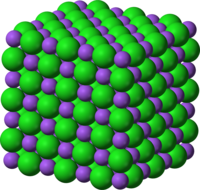


I hope I did this right :-)
Sodium Chloride
Sodium chloride (NaCl) is one of the most interesting compounds to me because it has many uses. Most of those uses are common everyday things. Sodium chloride can also be called salt, common salt, table salt, or halite. One of the uses of sodium chloride is to preserve food. The reason it is used for this purpose is because salt (sodium chloride) draws the water out of the cells of food (yes, this means that the food had to be alive at some point). For example salt would be used to preserve fish. Another use of salt is to disinfect wounds. Another use is shampoos and cleansing solutions used on household surfaces (salt is in these products). A very common use of salt is to season your food. Say you just ordered a small fry at McDonald's and you don't think there is something missing... you put salt (sodium chloride) on it and your tastebuds are satisfied. There are also MANY other uses of salt... too many to name. Obviously salt is pretty important if we use it in a lot of things. Sodium chloride is the most interesting and most useful compound there is!!!! Here are some pictures of the awesomest compound...
I hope I did this right :-)
Saturday, September 4, 2010
Parts of Atoms
Here is the video for parts of atoms... homework 9-9-10
Science Video
(click on the link above OR go to the video bar at the top of this page and click on the video with zelle showing in the picture)
Science Video
(click on the link above OR go to the video bar at the top of this page and click on the video with zelle showing in the picture)
Wednesday, September 1, 2010
Homework Due 9-2-10
Democritus lived in Ionia, Greece around 430 BCE. He was an Ancient Greek philosopher and he stated that the atom is the smallest particle of an element. He said, " Matter is formed of small pieces that could not be cut into smaller parts." The greek word for atom is atomos, which means uncuttable. He didn't actually prove that atoms cannot be cut up into smaller particles by experimenting, but he just thought about it. No one questioned Democritus and therefore no one tried to find out more about atoms or find out if there is something smaller than an atom. The next scientist to have studied atoms was John Dalton, an english chemist, meteorologist, and physicist. Dalton discovered more information about atoms during the early 1800's. He created a model of the atom called the "Pool Ball/ Grape" model. Dalton also had some ideas about atoms. One idea was that all elements are composed of atoms that can't be divided. Another idea was that all atoms of the same element are exactly alike and have the same mass. Another idea was that an atom of one element cannot be changed into an atom of a different element. Atoms also cannot be created or destroyed, just rearranged. One other idea was that every compound is composed of atoms of different elements, combined in a specific ratio. Democritus and Dalton both helped very much to discover information about atoms.
Cites:
-Wikipedia
-Notes from class
Cites:
-Wikipedia
-Notes from class
Sunday, August 29, 2010
First post ever!!!
Hey everyone... This is my first blog post ever! I'm excited about using this for homework!
Subscribe to:
Posts (Atom)